As any gardener knows, plants need fertilizer to thrive. But what about aquarium plants? Do they also need fertilizer? And if so, how can you fertilize them without harming the fish?

Aquarium plants can be fertilized without hurting the fish. For example, you can use liquid or tablet fertilizer or add organic matter like aquarium substrate, root tabs or fish food to the tank. Follow the directions on the fertilizer carefully so that you don’t overdo it and harm the fish.
Adding fertilizer to your aquarium will help your plants grow healthy and strong. Just be sure to do it in a way that won’t hurt the fish! we explore how this must be done and how much to dose to ensure we don’t harm our fish.
How Can I Fertilize Plants Naturally While Not Harming Fish?
When it comes to fertilizing plants naturally, there are a few different ways to do so without harming the fish. For example, Aquarium compost can be put in the aquarium tank. Compost contains organic matter, which helps plants thrive. You can also add fish food to the tank. Fish food is an excellent source of nitrogen, phosphorus, and other nutrients that plants need. The directions on fertilizer must be followed carefully so that you don’t overdo it and harm the fish.
Another way to fertilize aquarium plants is to use liquid or tablet fertilizer. Many brands and formulations are available of liquid fertilizer, so be sure to read the labels carefully to find one safe for aquarium use. Tablet fertilizer is a great option.
If you do, add more liquids to your tank. Be sure to follow the directions on the package carefully, as these chemicals are toxic if administered in massive doses. Also, it could harm your plants as an oversupply is never good, the water becomes too rich, and often plants will simply wither away.
Regardless of which method you decide to use, make sure to start with small doses of fertilizer and increase slowly over time. This will help you avoid harming the fish while still giving the plants the nutrients to thrive.

Does The Long Term Use Of Fertilizers Affect Fish Growth?
Long-term usage of fertilizers, just like overuse of fertilizer, can harm fish. The water in the aquarium may accumulate too many nutrients for an extended period of time, which is terrible for the fish. It can also damage the plants in the tank and cause them to wilt and die. There is good news, however, because you can use specific methods to fertilize your aquarium without harming the fish.
During a trial and error period, I found out that the use of root tabs (buried into the gravel) and no fertilizer works just perfectly for me in a dense setup.
How you may ask, is it that I can achieve this ? after researching a few things, I found that fish and their waste all give off things like nitrates and phosphates, which help promote plant growth just like any other fertilizer would.
So, in conclusion, as long as you are not overdoing it, fertilizing your aquarium plants should not harm your fish. When in doubt about how much to use, it is a good idea to start small and increase as needed.
Why Do Fertilizers Discolour My Water?
One potential downside of using fertilizers in an aquarium is that they can discolour the water. This is caused by the buildup of excess nutrients in the tank, which can turn the water a murky brown or green.
In most cases, this will not be harmful to the fish as most of the time it will be brown like a tea kind of colour, this is tannins like you would get from driftwood and other organic matter most fish appreciate this in moderations, it can be unsightly. It can make it difficult to see them correctly. If you have trouble with water discolouration, try using a smaller amount of fertilizer( or you could stop using it for some time) until the problem disappears. You can also use a filter to help keep the water clean and clear.
Can Expired Fertilizer Harm Fish?
Yes, it is possible for expired fertilizer to harm fish. Fertilizer that has expired may not be effective anymore, and they may also contain harmful chemicals that can be dangerous to fish. If you are using expired fertilizer in your aquarium, you should do a couple of water changes once every 2 to 3 days.
day 1, do a 40% water change
day 2, do a 20% water change
day 3, do a 15% water change
day 4 perform minor changes of around 10-15% from this point on every 2-3 days
In approximately a week and a half, you should be able to resume your regular schedule of water changes, and throughout this entire process and afterwards, do not use the expired fertilizer in the aquarium.
Is The Use Of Regular Sand Suitable For Plants and Fish?
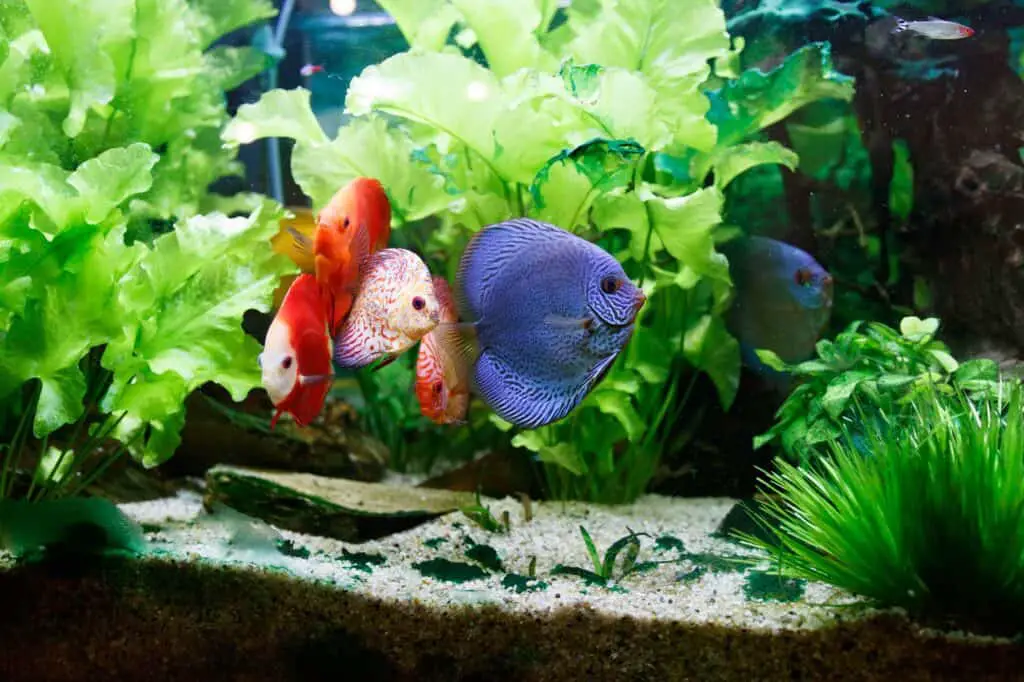
Many people choose to use sand as a substrate for their aquarium plants and fish. From my encounters, I find that regular sand carries lots of harmful chemicals and needs to be washed thoroughly before usage in an aquarium. Upon cleaning the sand as you rinse them, mainly the fine particles remain, and when this is used, it can become too dense for the plant’s roots.
It can also become toxic for fish as harmful bacteria can build up in the soil as it’s too dense and water won’t flow through it as well compared to gravel or rocks.
Fertilizers are an essential part of plant care, but it is crucial to be aware of the potential dangers they can pose. Too much fertilizer can discolour water and harm aquatic life, so be sure to use them in moderation. Following these simple steps can ensure that your plants get all the nutrients they need while keeping your aquatic life in pristine condition.