There is a lot of debate among tropical fish enthusiasts about whether Rams can be kept in tropical aquariums. Some people believe that they are hardy enough to withstand the warmer water, while others think they need to be in colder water to stay healthy. This article will explore both sides of the argument and provide some tips on how to care for Rams.

Rams are not hardy unless their water conditions are met regularly. While they are not meant for beginners, these fish will thrive in mature water. Provide them with clean water and places to hide, and they will do just fine. They can survive in soft water (preferable) or borderline hard water.
Rams are among the most beautiful fish species in the world. Their colours are striking and will quickly attract most fish hobbyists, but they require good and stable water quality. There are different debates about if they like soft or hard water, among other things that we will discuss, so have a browse through.
Appearance and water parameters
Rams are typically blue, gold, or red, with a black line through their eyes and dark patches on their bodies and fins. On the bodies of many Rams, there is distinctive blue spotting. The fins are often edged in black as well. In general, males are brighter in colour and have larger fins. Females are typically a drabber colour but make up for it in their plumper bodies. Both sexes reach about 5 – 7cm (2 -3inches) at maturity.
Rams come from South America and are found in the rivers and streams of Colombia, Peru, Ecuador, and Brazil. In the wild, they are used to soft water with a neutral pH.
Rams are not very hardy fish and will not do well in an aquarium that is not maintained correctly. The water must be kept clean, and the proper temperature, pH, and hardness levels must be maintained. If the water quality is not up to par, Rams will develop diseases and eventually die.
Native to (origin) – Colombia, Venezuela, Ecuador, Brazil, and Peru
Temperament – Peaceful
Minimum Tank Size – 20 gallons approx 10 gallons per fish
Breeding type – Egg layer
pH – 5.2 to 6.7
Hardness – 10 dgh
Temperature – 74 to 82F (23 to 28C)
Diet – Omnivore
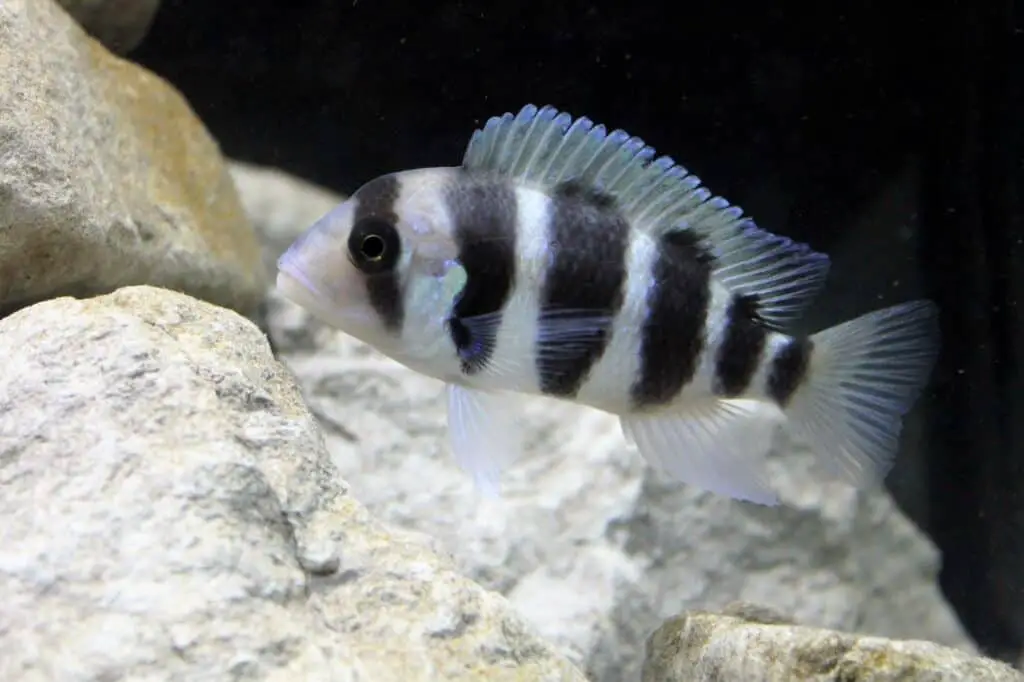
What’s the best way to care for Ram cichlids?
Rams should be kept in a well-planted tank with plenty of hiding places. They need clean, warm water and regular water changes. They prefer soft to neutral water. Rams are not particularly territorial, but they will establish a hierarchy within the tank.
When keeping Rams, it is essential to pay attention to their diet. Rams are omnivores and require balanced nutrition. They are sensitive to water conditions, so it is necessary to monitor the tank and ensure that the parameters are within the ideal range.
Are Ram cichlids aggressive?
Rams are generally peaceful fish, but they can be aggressive towards other Rams and become very aggressive when spawning. They need plenty of space to swim and hide, so it is vital to have a large tank if you plan to keep them in a community aquarium. They are not recommended for beginners. Their sensitivity to water conditions means they need to be in a well-maintained tank. And they are best kept with other peaceful fish. They may struggle with other highly territorial fish.
What do Ram cichlids eat?
Rams are omnivores and will eat a variety of foods. They need a diet that is high in protein and low in carbohydrates. A good quality flake food or pellet food can be supplemented with live, frozen, or freeze-dried foods. Brine shrimp, bloodworms, and daphnia are all excellent options. Pellets specifically formulated for cichlids may contain all the essentials required for these fish, but pellets and other dried food can be harsh on their digestive system, so it is a good idea to soak their food in the same water from the tank for a few minutes before feeding this will also help with constipation and bloat.
Should Ram cichlids be kept in pairs?
Rams are peaceful fish but can be territorial with their kind. Ideally, they should be paired or in a group of 4 or more. They need plenty of space to swim and hide, so it is crucial to have a large tank if you plan to keep them in a community aquarium.
Rams need plenty of hiding places in their tank. They are shy fish and will spend most of their time hiding if they do not feel safe. Provide plenty of plants, caves, and other hiding places so that they feel comfortable in their tank.
What is the minimum tank size for Ram cichlids?
The minimum tank size for rams is 20 gallons, and the ideal temperature is between 74° – 82°F (23.33°-27.77°C). Each ram should be allocated per 10 gallons of water depending on filtration, but if your filter is good, 10 gallons per ram will suffice quite nicely.
What is the lifespan of Ram cichlids?
Ram cichlids can live up to 10 years, but the average lifespan is around 5-7 years. They are not the easiest fish to care for and are sensitive to water conditions. If the tank is not maintained correctly, they can develop diseases and die prematurely. The quality of their water on a regular basis has a direct impact on their lifespan.
Rams are a popular choice for many aquarium enthusiasts because of their beautiful colours and peaceful temperament. They are excellent fish that can be easy to care for if their needs are met. With proper care, Rams can provide years of enjoyment in your home aquarium.

How many species of freshwater Ram cichlids are there?
There are currently six species of freshwater rams. These include the Bolivian ram, the German blue ram, the Gold ram, the Pearlscale ram, the Ram cichlid, and the Red devil cichlid. All of these fish are popular choices for home aquariums, and each carries its own unique needs.
Rams are beautiful fish that can be easy to care for if their needs are met. With proper care, Rams can provide years of enjoyment in your home aquarium. Rams need good water quality all the time to thrive. If the tank is not maintained correctly, they can develop diseases and will no doubt shorten their lifespan. Rams will not do well with other cichlid species except discus. They are peaceful fish but can be territorial with their kind and be bullied by other larger species.