Top 12 Rapid Breeders
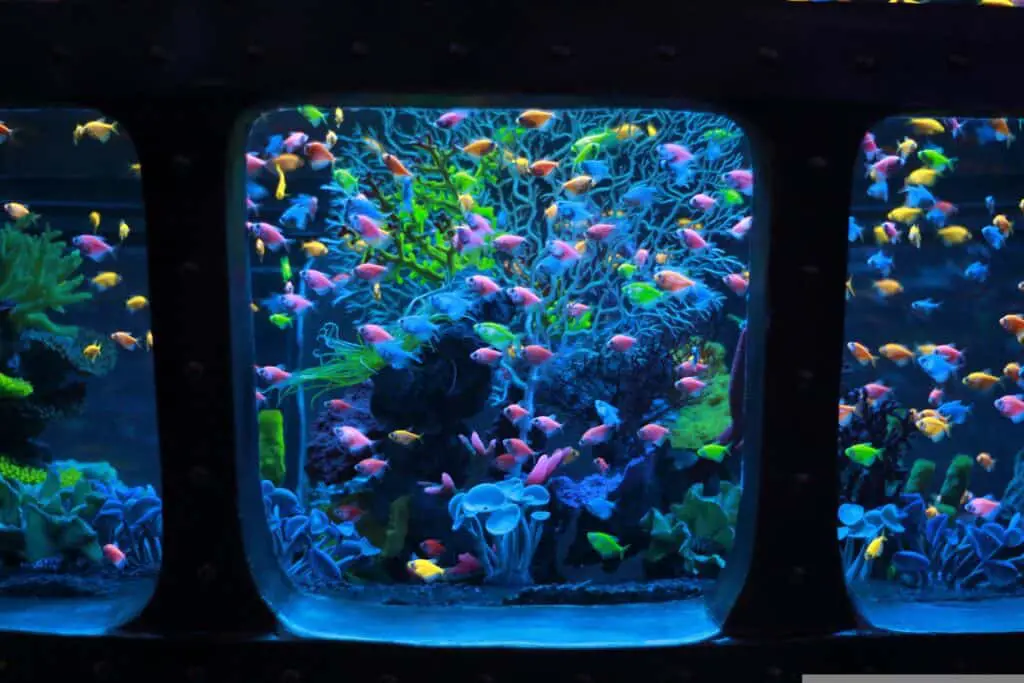
Tropical fish breed the most because they have shorter life spans. They are constantly looking for new ways to increase their population. Some of the tropical fishes that breed most frequently include:
- Guppies
- Mollies
- Convict Cichlids
- Swordtails
- Platys
- Endler’s
- Least Killifish
- Angelfish
- Kribensis Cichlids
- Zebra Danios
- Rosy Barbs
- German Blue Rams
These fish make the top 12 because not only do they pair easily with females, the process is a smooth one, and the number of times it can happen in a year are the reasons for them being here. I will include more information in detail regarding individual species in the content that follows.
Guppies will produce live offspring, and they can have up to 200 babies at a time survival rate for the fry depends entirely on your setup. They can also reproduce up to six times per year and reach sexual maturity in as little as 4 months.
Mollies are livebearers that can give birth to 10-200 fry at a time. They can reproduce up to 6 times per year, and the general find here is the older the molly, the more fry they tend to produce.
Convict Cichlids breed by laying eggs, this can occur as close as twice in 3 months, and they will produce 20 to 250 babies age has a role in the number of babies a female can produce. Usually, the larger, the better.
Swordtails are live-bearing fish that can have 50 to 100 babies. They can reproduce once every evr=ery 4 to 6 weeks, and the female can store sperm and use it when she needs to; therefore, she can sometimes be pregnant without the presence of a male.
Platys are a type of fish that can breed very quickly and often once a month. They usually have around 20 -50 babies at a time (this can be exceeded in some cases) and will eat their own young at times.
Endlers Are Livebearers and can breed more than 10 times a year, they give live birth, and babies can vary from 8 to 80 based on the size and age of the female.
The Least Killifish reproduce through internal fertilization. They can have up to 40 babies at a time and can reproduce up to six times per year.
Angelfish can lay anywhere from 100 to 1000 eggs and can reproduce 3 to 4 times a year.

Kribensis Cichlids are a breed that is relatively easy to breed in captivity. They can have anywhere from 10-20 fry at a time and can do this about 3-4 times a year.
Zebra Danios can spawn multiple times per year and have anywhere from 200-400+ babies. Through egg-laying, these fish find a mating partner and stick to them. Once the partner is lost through separation or death, they will often stop breeding altogether.
Rosy Barbs breed prolifically and are relatively easy to care for. They can have up to a few hundred babies at a time through the laying of eggs, and they can reproduce up to four times per year.
German Blue Rams breed by laying eggs. About 500 eggs are laid by the female, which the male will fertilize. The eggs will hatch in about three days, and the fry will be free swimming in another five days. German Blue Rams can reproduce up to four times a year.
How Can I Encourage Breeding In My Tropical Tank?
By providing a healthy and comfortable environment, you can encourage your fish to breed. Make sure the water is clean and has the correct pH level, and provide plenty of cover for the fish to spawn. You may also want to add a breeding trap to your tank to catch the eggs.
Can A Female Fish Having Babies Too Often Affect Them Negatively?
While breeding can be a healthy and rewarding experience for both fish and aquarists, it can also have negative effects. If a female fish is kept in constantly breeding conditions, her eggs will eventually start to deteriorate. This can lead to health problems and a weakened immune system. Additionally, the constant stress of breeding can shorten the fish’s lifespan. If you notice your fish starting to look tired or sick, it’s best to give them a break from breeding.
Which Produces More Offspring Egg Layers Or Livebearers?
Generally, egg layers tend to produce more offspring than livebearers. This is because livebearers are more prone to dying soon after giving birth. At the same time, egg layers can lay hundreds of eggs at a time and typically have a higher survival rate. The most common tropical fish that lay eggs include bettas, cichlids and goldfish.
Are Males Aggressive If They Want To Mate And Babies Are Around?
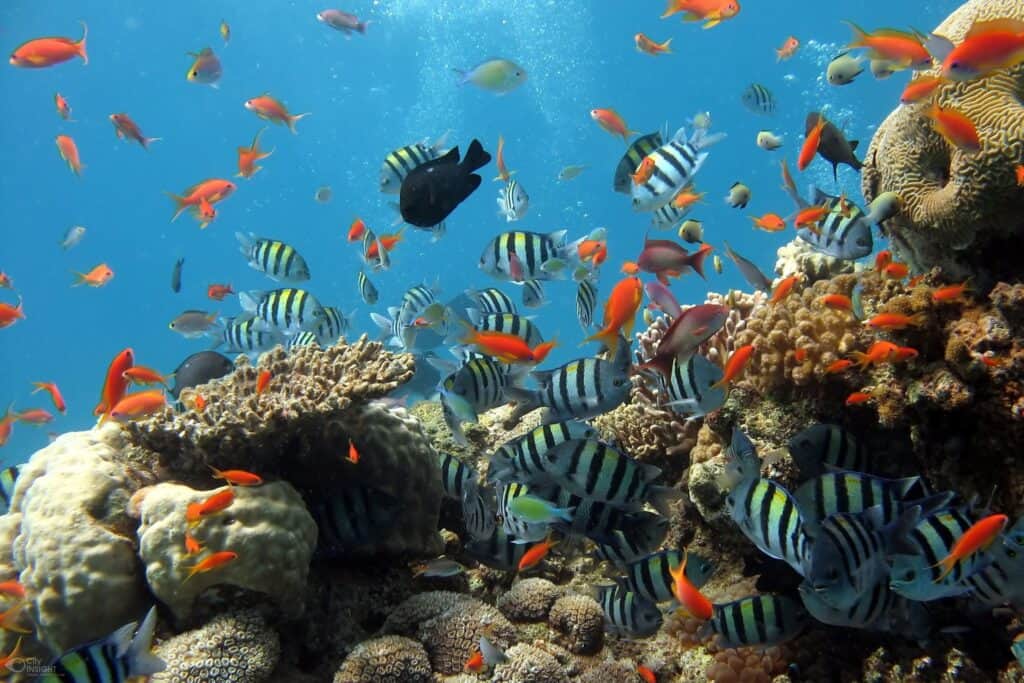
Males can get aggressive if they want to mate, and there are babies in the tank. This is due to the female avoiding mating while she has her old fry in the tank. She will be reluctant as she is aware that the now juveniles can easily eat her egg or newborns.
Can Fish Breed In A Community Tank?
It is possible for fish to breed in a community tank. Some fish are more territorial and aggressive than others and will not do well in a community setting. However, many tropical fish can successfully breed in a community tank if given the right conditions. but it can be difficult because the parents may eat their young. It is essential to provide a lot of hiding places for young fish. Some of the most common fish that breed in community tanks include guppies, mollies, and platys.
What To Do If A Male Is Troubling The Female To Mate While Pregnant?
If your male is troubling the female to mate while pregnant, you can try to separate them until she gives birth. Once the fry is old enough and large enough, you can put them back together. It is best to do your research on the specific species of fish. You have to see what their mating habits are before attempting to breed them.
Breeding fish can be a captivating experience, but it’s important to remember that good care and regular maintenance are essential for the health of both the fish and their offspring. Breeding can also be quite stressful, so it’s vital to ensure your fish has a break now and then. By providing a healthy environment and following these tips, you can successfully breed tropical fish.