Tropical fish tanks can be beautiful additions to your home, but did you know that they can also be quite noisy? In fact, some of the biggest offenders when it comes to noise pollution in your home can be your aquarium filters and air pumps!
Most tropical fish tanks have a noise being emitted. Whether it is a bubbling noise or humming, even simple water flowing over gravel or into the tank from a HOB filter, there is still a noise coming from them. The most common culprits for noise are filters and air pumps.
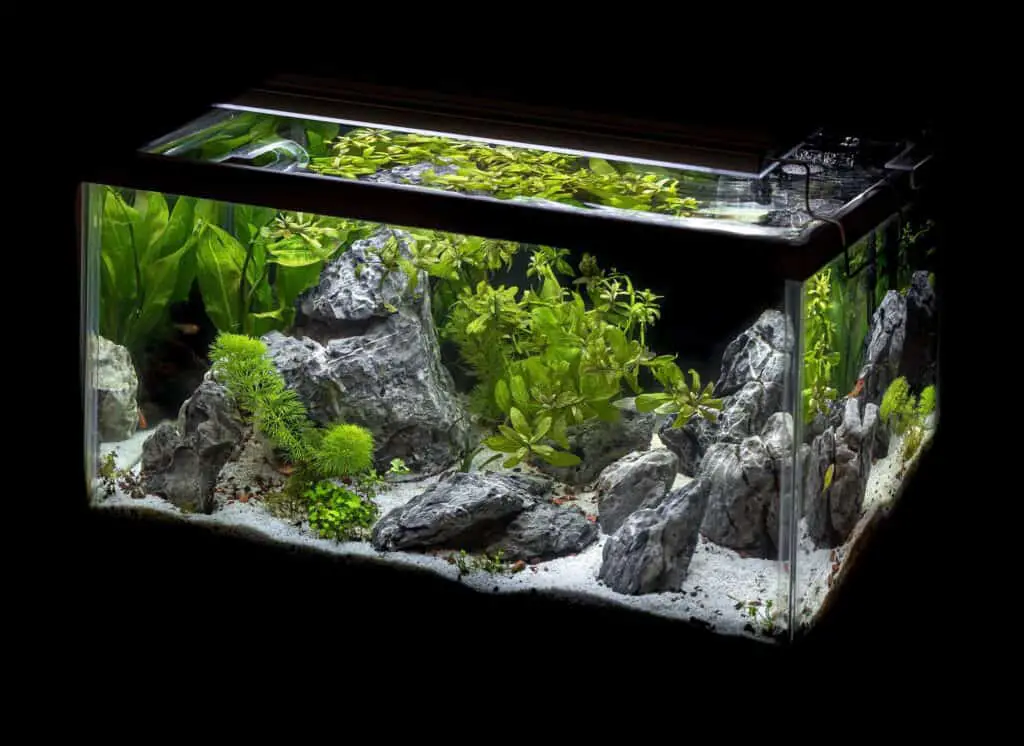
Suppose you’re thinking about adding a tropical fish tank to your home. In that case, it’s essential to be aware of the potential for noise pollution and take steps to reduce it. Here are some tips for keeping your tropical fish tank as quiet as possible:
How to reduce noise in fish tanks
1. Choose a low-noise filter. There is a multitude of aquarium filters available, and many of them are very loud. If you’re looking for a low-noise filter, consider an under gravel filter or a sponge filter.
2. Use a muffler on your air pump. Air pumps can be pretty noisy, but there are several ways to muffle the sound. One easy way is to use an old T-shirt over the pump – just make sure there are no holes in the fabric!
3. Place your tank in a quiet spot. Try not to place your tank in a busy area of your home where it will compete with other sounds for attention. A bedroom or office would be a good choice.
4. Use sound-dampening materials. If you’re really struggling to reduce the noise from your tropical fish tank, consider using sound-dampening materials like acoustic foam or insulation around the tank. This will help to dampen the sound and make it less noticeable.
Following these tips, you can enjoy all the benefits of a tropical fish tank without noise pollution!
How to reduce the noise of a filter?
If you have a filter in your tropical fish tank, you may have noticed that it can be pretty noisy. However, there are a few typical ways to reduce the noise from the filter, so your fish (and you!) can enjoy a peaceful environment. One way to reduce noise is to use a foam pad to dampen the sound.
Reduce noise by putting the filter on a piece of furniture or on the floor instead of hanging it on the side of the tank. You can also try using a different type of filter that makes less noise. If you are using an internal submersible filter, make sure it is fully submerged so it will be quieter. It is possible for you and your fish to create a peaceful environment.
How to reduce the noise of an air pump?
Air pumps are deemed an important piece of equipment for many aquariums, providing much-needed oxygenation for the water. However, they can also be a significant source of noise, mainly if they are not appropriately positioned. If you are struggling with a noisy air pump, you can do a few things to reduce the noise level.
One is to try to position the pump so that it is not facing or pointing directly at any of your other tanks or fish. You can also try to baffle the pump with some Styrofoam or put it in a box or cabinet to help muffle the sound. Another option is to run a longer airline to move the unit into an area where the noise will not bother anyone. This simple measure will reduce the noise from your air pump and create a more peaceful environment for your fish.
Will a fish tank lid reduce the noise level?
Whether or not a fish tank lid will reduce the noise level depends on the type and size of the tank. Larger tanks with more water will be louder than smaller ones, and tanks with gravel or other decorations on the bottom will be noisier than tanks with smooth surfaces. Some lids are designed to dampen noise, but it ultimately depends on the individual tank. In most cases, a cover that is more compact than a tank will emit less noise than one that has many openings allowing sound to travel freely.
Can I cover my fish tank to ensure the noise stays within the tank?
No, you cannot cover your fish tank to ensure the noise stays within the tank unless this is a lid that covers the entire top with a single opening noise that will generally find its way through most other materials. In addition, fish tanks produce a bubbling noise as the water circulates, and this cannot be eliminated by covering the tank. While some people find the sound relaxing, others find it annoying.
If you are someone who is bothered by the noise, try placing your tank in a room where it will not be as noticeable. Alternatively, you can purchase an aquarium that has been specifically designed to reduce circulation noise. These tanks typically have foam or other sound-dampening material around the filter intake and outlet. By reducing the amount of noise coming from your fish tank, you can enjoy the peaceful ambience of your aquarium without being disturbed by the sound of bubbling water.
Are wave makers noisy?
Wavemakers are a contentious issue among aquarium owners. Some people say that they are noisy and disruptive, while others find them calming and soothing. The truth is that wave makers can be both noisy and relaxing, depending on the design of the device. For example, many wave makers produce a gentle humming noise that is no louder than a running fountain. However, some models are designed to create more powerful waves, and these can have a noticeable amount of noise.
In addition, the noise level can vary depending on the size of the aquarium. A small tank will amplify the sound of the waves, while a larger tank will muffle the noise. As a result, it is absolutely important to consider both the size of the aquarium and the type of wave maker before making a purchase.
Does a HOB filter cause lots of noise?
If you’re looking for a low-noise aquarium setup, a tropical fish tank with a HOB filter is not the best option. Tropical fish tanks with a HOB filter can be pretty noisy. If you have a lot of fish in your tank or if you have a particularly loud HOB filter, the sound of the water can be quite overwhelming.
The constant sound of the water flowing through the filter can be very distracting, and it can be challenging to enjoy the peacefulness of your aquarium when the noise level is so high. If you’re looking for a quiet aquarium setup, choosing a different type of filter is best. Canister filters are much quieter than HOB filters, and they are also much easier to maintain.
Can I reduce the noise of a sump filter?
Sump filters are essential to many homes, but they can be pretty noisy. Though there is some good news, there are some things to do so you can reduce the noise of your sump filter. Insulating the filter is one option. By doing this, the sound will be muffled, and the amount of noise produced will be reduced.
Alternatively, you can purchase a filter that has been specifically designed to reduce noise. There are a number of different brands and models available, so you should be able to find one that suits your needs.
How to reduce water noise from a spray bar?
Noisy water pumps and spray bars are a common issue with tropical fish tanks. If you’re struggling to reduce the noise your tank is making, try the following tips:
1. Make sure your pump is submerged correctly in the water. If it’s not, this can cause excess noise.
2. Make sure your hoses and tubing are adequately secured and don’t have any kinks in them. This will also help to reduce noise.
3. Try using a noise-dampening material on your tank cover or hood. Using this method can help muffle the noise produced by the water pump and spray bar.
4. If your pump is particularly loud, you may want to consider replacing it with a quieter model.
5. The last resort is to try moving your tank to a different location. This won’t reduce the noise, but it will help to muffle the sound.
Tropical fish tanks can be pretty noisy, but you can do several things to reduce the amount of noise they produce. As long as you keep the tips above in mind, you should be able to enjoy the peace and quiet of your aquarium without being disturbed by excess noise.

Can I unplug the filter to reduce noise at night?
If you’re like most fish keepers, you want to do everything you can to create a healthy and happy environment for your fish. So it’s understandable that you might be tempted to unplug the filter at night to reduce noise. It is, however, not a good idea for several reasons. First, fish need oxygen to breathe, and the filter helps keep the water clean and oxygenated. Secondly, each time the filter is switched off for long periods of time, the water chemistry changes for the worse due to lack of filtration.
So while it may be silent, it’s not suitable for your fish or their water. If you want to reduce noise at night, try using a white noise machine or placing the aquarium in a room that’s already quiet. These are just some of the many ways you can create a safe and healthy environment for your fish.
Do bubblers make lots of noise?
Many people choose bubblers for their fish tanks because they provide a steady flow of oxygenated water. However, bubblers can also be quite noisy, and this can be a major downside if you’re trying to create a peaceful environment in your home. If the noise from your bubbler is becoming disruptive, there are a few things you can try to reduce the noise level. The first step is to inspect for anything that may be obstructing the flow of air. If there is, removing the obstruction should reduce the noise.
Additionally, you can try using a bubbler with a built-in silencer. This type of bubbler uses an air stone to diffuser the air bubbles, which helps to reduce the noise. By experimenting with different solutions, you should be able to find a solution that works for you and allows you to enjoy the benefits of a bubbler without the unwanted noise.
Does gravel filter out aquarium noise in any way?
Though debate exists over the matter, most experts agree that gravel does not filter out aquarium noise. It is possible that the sound of water passing over gravel may help to muffle the sound of the bubbler or filter, but there is no scientific evidence to support this claim. In fact, if you’re looking for a way to reduce noise levels, it’s best to try one of the other methods mentioned in this article.
This is an important consideration, as too much noise can be harmful to both fish and humans. Whenever you have any concerns regarding the noise levels in your aquarium, be sure to consult with a professional before making any changes.
Does more fish mean more noise in a fish tank?
Fish tanks can be a great addition to any home, providing both a relaxing atmosphere and a fascinating source of entertainment. However, one potential downside of owning a fish tank is the noise level. While the amount of noise produced by a fish tank will vary depending on a number of factors, in general, more fish will create more noise.
This is because fish produce sound when they breathe and when they swim. If you’re looking for a quiet aquarium, it’s best to avoid overcrowding your tank with too many fish. By taking care to choose the right size tank for your needs and stocking it wisely, you can enjoy all the benefits of fish ownership without being

Adding a fish tank to your home is a great way to bring in some natural life and decoration. However, many people are unaware that most tropical fish tanks make noise. So, if you’re looking to add a fish tank to your home, be sure to follow the measures listed above to reduce noise as much as possible. Best of luck!